
The moment I stepped off the train at Kaihimmakuhari Station, I could feel the atmosphere was different from an ordinary day. Passing through the ticket gates, I was immediately swept into a stream of people all heading in the same direction. Some wore staff badges around their necks, others carried large backpacks, and together they flowed toward Makuhari Messe like a mighty river. Joining that current, I couldn’t help but pick up my pace, thinking, “Finally, a whole day of nothing but games begins now.” The instant the exhibition hall came into view, a surge of excitement burst inside me: “It’s starting.”
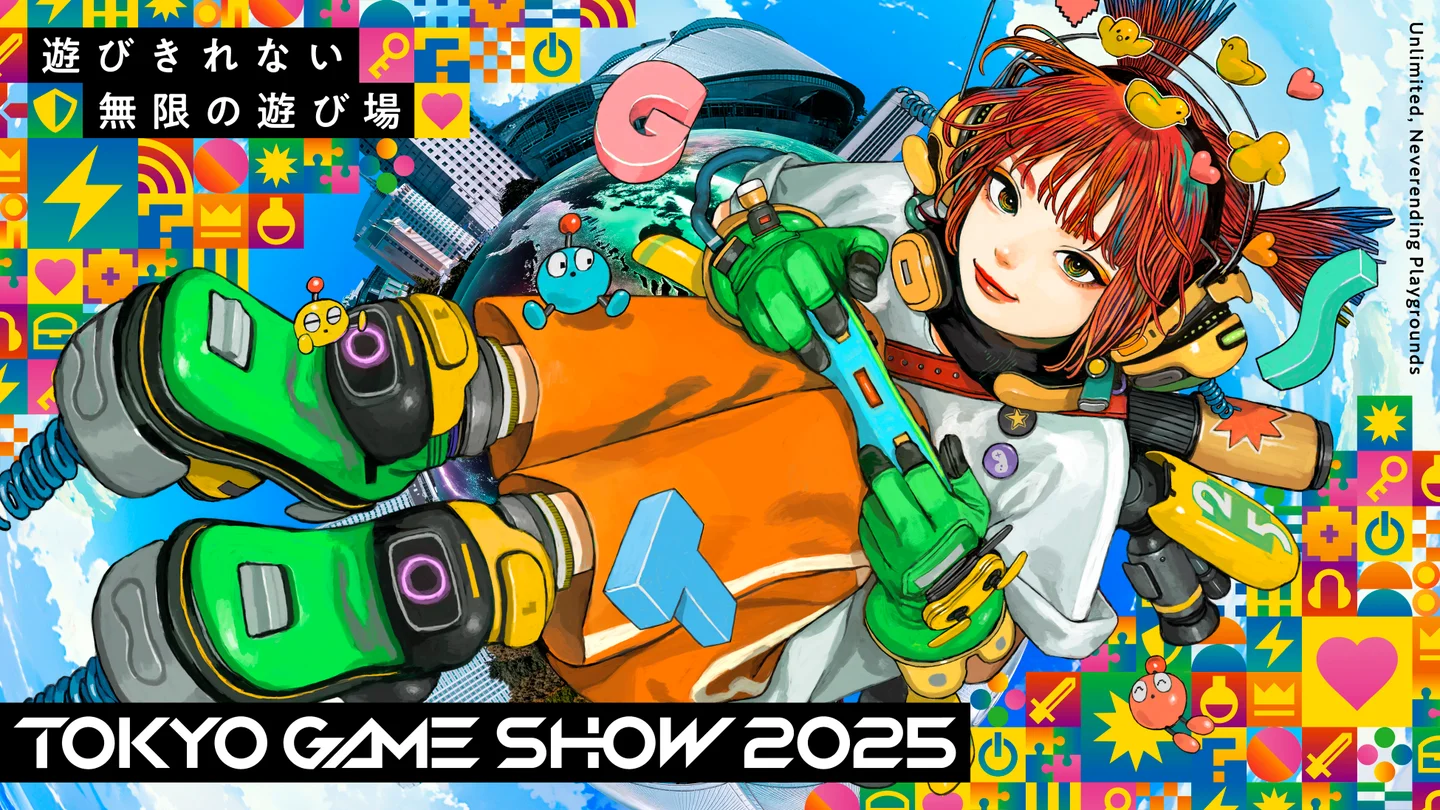
Once again, Tokyo Game Show 2025 was held at Makuhari Messe. Even though it’s become an annual tradition, my heart still races when the day finally arrives. This year’s theme was “Play Beyond Limits, Play Beyond Worlds.” Just the slogan alone is enough to spark anticipation, but being there in person made me realize it wasn’t an exaggeration at all. According to official reports, the four-day event welcomed 263,101 visitors. While that’s a slight dip compared to last year, standing among the crowds reminded me of just how extraordinary it is that so many people gather in one place to celebrate games.

This time, I attended on the two business days. Honestly, based on my memory of last year’s public days, I had assumed business days would feel a little calmer. But the moment I walked inside, my expectations were shattered—it was people, people, and more people! If it was already this packed on business days, I could only imagine how overwhelming the public days must have been. The thought alone sent a chill down my spine.
Straight to the Like a Dragon Booth

After entering the venue, my first destination was the SEGA booth. My goal, of course, was the Ryu Ga Gotoku Studio showcase. Just the day before, at RGG SUMMIT 2025, they had announced two huge titles: the remake Like a Dragon: Kiwami 3 and the brand-new Like a Dragon 3 Gaiden: Dark Ties. The whole event still seemed to be buzzing with excitement from the announcements—and now, attendees had the rare chance to try out these games right away.
Even from a distance, the massive screen and booming sound effects pulled me toward the booth. A long line of fans had already formed, a clear sign of just how much anticipation these titles had generated. Attendees could choose to play either Kiwami 3 or Gaiden: Dark Ties. For me, the choice was obvious: I went straight for Dark Ties.

The reason was simple—I wanted to play as Yoshitaka Mine, one of the series’ most beloved characters. Up until now, he’s always been portrayed as an enemy. The idea of controlling him myself made my chest tighten with excitement. Once I picked up the controller, I immediately noticed the weight and feel of his unique combat style. It was refreshing, and I thought, “Yes, this truly feels like a new chapter in Like a Dragon.”
Though the demo session was short, just experiencing the intensity of the combat and a glimpse of the story was more than enough to capture my heart. My anticipation for the full release skyrocketed. And when I received the exclusive novelty item at the end of the demo, it was pure joy—it felt like tangible proof that I had been there, and I couldn’t help but smile as I held it in my hands.
Later, the live stage event took the excitement even higher. Legendary voice actor Akio Ōtsuka appeared on stage, sharing behind-the-scenes stories from his role in Kiwami 3. His deep, resonant voice brought the anecdotes to life, and the crowd erupted in applause again and again. For fans, it felt like a true gift, and in that moment, the entire hall was united by its love for Like a Dragon.
For a more detailed report on the Like a Dragon: Kiwami 3 and Like a Dragon 3 Gaiden: Dark Ties demo sessions and live stage, we’ve prepared a separate article. If you’d like to dive into the on-stage excitement and behind-the-scenes stories, be sure to check it out here:
The Shock of Sonic Racing: CrossWorlds

As I continued through the SEGA booth, another major attraction caught my attention: the demo corner for Sonic Racing: CrossWorlds. What stunned me most was the sheer extravagance of the playable roster.
Hatsune Miku, Ichiban Kasuga from Like a Dragon, Joker from Persona 5 Royal… That lineup alone would have been more than enough. But then came the announcement that upcoming DLC and season passes would add characters from Minecraft, SpongeBob SquarePants, Pac-Man, and even Teenage Mutant Ninja Turtles. When the news broke, the crowd’s reaction was a collective gasp—“Wait, they’re really going that far!?”

Naturally, I chose Ichiban Kasuga for my first race. The controls felt intuitive and accessible, letting even beginners enjoy the rush of speed, but the depth was there too—perfecting drifts and boosts quickly ramped up the challenge. Another delightful touch was that each character came with their own custom-designed vehicle. Sliding into Kasuga’s uniquely styled machine brought an instant grin to my face.
The tracks themselves were impressively varied and visually spectacular. Neon lights sparkled, and each stage had its own distinct atmosphere. The combination of dazzling visuals and high-speed action pulled me completely into the world of the game, and by the time I crossed the finish line, I was thoroughly immersed.
Even within the short demo time, it was clear: this wasn’t just another character mash-up game. The experience had real weight. Judging from the energy in the booth, it was obvious just how much excitement Sonic Racing: CrossWorlds was generating among fans.
By the time I left the SEGA booth, I was already drained of energy—but my heart was overflowing. It was one of those moments that made me think, “This alone made today worth it.” And once again, I was reminded that the true magic of Tokyo Game Show lies in those “heart-grabbing experiences that strike in an instant.”
Pragmata — A Miracle Playtest Experience
After soaking up everything at the SEGA booth, my next destination was Capcom’s showcase of upcoming titles. Among them, the one that stood out the most was the long-awaited brand-new IP: Pragmata.
Ever since its reveal, this title had stirred up buzz with its sci-fi-heavy visuals and mysterious story. And now, for the first time, attendees had the chance to play it. Unsurprisingly, the booth drew massive lines from the very start of the day.
When I went to check the ticket distribution, however, the sign read “All tickets distributed.” My shoulders slumped—“Of course…”—and I was on the verge of giving up. But then, pure luck struck. While wandering the venue, I stopped by the ASUS booth, and to my astonishment, there was a station where you could actually play Pragmata.
Being able to experience the game at a completely unexpected place, after missing out at the main booth, felt nothing short of miraculous. The disappointment of failing to get a ticket vanished instantly, replaced by sheer joy—it was a stroke of fortune I’ll never forget.
As for the gameplay, it was exactly what the early information had hinted at: a sci-fi action-adventure. It blended the exhilaration of third-person shooting with puzzle elements that required clever use of hacking. The pace of switching weapons mid-combat felt smooth and satisfying, and with every stage, I was drawn deeper into the world. Beyond the stunning visuals, the futuristic cityscapes and character interactions were so rich that I couldn’t help but think: “This could very well become Capcom’s next flagship title.”
By the time I put down the controller, all traces of earlier frustration had completely disappeared. Instead, I was filled with the satisfaction of having seized an opportunity that came by pure chance.
Experiencing the Evolution of Devices: ROG XBOX ALLY X

Tokyo Game Show isn’t just about the games—the latest hardware and devices are always a huge draw as well. This year, one of the standout highlights was ASUS’s portable gaming PC lineup, the ROG XBOX ALLY series. I was lucky enough to get hands-on time with the latest model, the ROG XBOX ALLY X, and I was genuinely impressed by its refinement.
The first thing I noticed when I picked it up was a sense of reliability. The size remains comparable to previous models, designed so that even long play sessions won’t leave your hands fatigued. What really stood out to me were the LR buttons on the top. Their feel closely resembles an Xbox controller—crisp and satisfying, with just the right amount of click. The redesigned grip also deserves praise, offering remarkable stability and comfort when held.
Inside, it runs on Windows, giving it excellent compatibility with PC games. Combined with the familiar control feel of an Xbox controller and the vast game library of PC, the device struck me as the best of both worlds—a true hybrid portable. While the price isn’t exactly budget-friendly, considering the performance and portability it offers, it feels more like an investment-worthy device than a costly indulgence.
Actually handling the hardware made all the difference—it revealed textures and ergonomics that no spec sheet or promotional video could fully convey. It was the kind of experience only TGS can provide: the pure joy of getting to test the real thing with your own hands.
The Dominance of Horror Titles on the Show Floor

On the other hand, even though I didn’t experience them myself, two booths that absolutely dominated the show floor were Silent Hill and Resident Evil. Both are iconic representatives of the horror genre, and their demo tickets disappeared almost instantly after distribution began. The demand was so high that unless you sprinted to line up first thing in the morning, you had no chance of securing one.

I’ll admit—I’m not particularly good with horror games, so I didn’t try. But just seeing the massive crowds around the booths and the excitement radiating from the fans was enough to understand how much attention they commanded. Watching players come out of the demos chattering with excitement only reinforced for me how enduring horror’s popularity really is.
Silent Hill, Resident Evil, and Pragmata. The ability to witness both “flagship classics” and “brand-new challengers” from publishers like Capcom side by side—that’s part of what makes Tokyo Game Show so special. Even the frustration of missing out turned into motivation: “Next time, I’ll definitely try!” That kind of energy seemed to fill the entire venue.
By this point, both my energy and stamina were nearly drained. And yet, the thrill of getting hands-on with new games and devices far outweighed the exhaustion. I couldn’t help but think, “This is exactly why coming to TGS is worth it.”
The Impact of Riot Games’ 2XKO

One of the strongest impressions I took away from Tokyo Game Show 2025 came from the Riot Games booth. Best known worldwide for League of Legends (LoL), Riot is now making its long-anticipated entry into the fighting game genre. That title is none other than 2XKO.
The idea of Riot moving “from MOBA to fighting games” sparked a mix of surprise and excitement, and it showed—there was always a line for the demo, while in front of the stage, laughter rang out as attendees tried a punching-machine mini-game. The whole booth felt like an amusement park attraction, with plenty of ways to entertain fans beyond just the main game.

When I finally got to play, 2XKO revealed itself as a 2v2 tag-team fighter. Players can either control both characters themselves, switching back and forth, or team up with a friend, each taking charge of one fighter. The assist and tag systems were particularly rich—teammates could jump in to help you escape combos or set up follow-ups, constantly reinforcing the sense of partnership.

On top of the deep mechanics, seeing iconic LoL champions reimagined in fast-paced fighting action was electrifying. It’s easy to imagine longtime MOBA players giving fighting games a try, potentially creating a brand-new community that crosses genre boundaries.
The official release is set for October 8 (PC / PS5 / Xbox Series X|S). After feeling the buzz of the booth firsthand, I know I’ll be circling that date on my calendar.
Novelties and Giveaways that Colored the Show
Tokyo Game Show isn’t just about demos and exhibits—the novelties and giveaways from each company are also a huge part of the fun. Like many attendees, I found myself collecting more and more as I made my way from booth to booth, until both hands were completely full of bags and trinkets.
Clear files, stickers, exclusive demo items—the list goes on. Each one had its own unique design and creative touch, and just looking through them later was enjoyable in itself. They weren’t just “extras,” but felt like genuine expressions of appreciation and fan service from the companies. It reminded me once again of the warmth and thoughtfulness behind the event.
And then there was Red Bull. Distributed for free across the venue, it became my lifeline more than once. Walking through such a vast space inevitably drains your energy, and every time I was handed an ice-cold can, it felt like salvation. Each sip brought back my strength—“Alright, I can push on a little longer.” I couldn’t have been more grateful.
After Two Days
After powering through two full business days, I was left with both a pleasant fatigue and a deep sense of fulfillment. My step count must have easily surpassed tens of thousands, and my legs felt like stone pillars—but in my chest remained the satisfaction of knowing, “It’s rare to have two days this packed with experiences.”
To avoid the rush of the departing crowds, I stopped at a shopping complex near Makuhari Messe for dinner, taking some time to relax before boarding the train. Looking at the paper bags full of my “spoils” while I ate, I felt like a hero examining treasures after a long adventure.
What struck me most of all, however, was the sense of expectation for the future that filled the entire venue. There were moments of pure joy as new titles were revealed, and tears shed by fans celebrating the return of beloved series. Horror, fighting, action, RPGs, hardware displays—across genres and generations, people came together in one place to share their excitement. That scene, more than anything else, felt like the true essence of Tokyo Game Show.
Looking ahead, it has already been announced that next year’s event will expand to five days. There’s no doubt it will be an even denser and longer festival. That’s exactly why I’ll need to carefully plan which booths to prioritize and what strategy to take when navigating the show floor.
“I’ll definitely be back next year.” That thought came so naturally to me—and it’s proof of just how invaluable Tokyo Game Show 2025 was as an experience.
Conclusion
Looking back, this year’s TGS was defined by SEGA’s overwhelming presence, Capcom’s powerful mix of new titles and horror icons, and Riot’s bold new challenge. On top of that, there were hardware showcases like the ROG XBOX ALLY, countless novelties, and an atmosphere charged with excitement and energy.
Even after writing nearly 6,000 words, I still find myself thinking, “I wanted to write about that too, I wish I could have shared more.” And that, more than anything, proves the essence of Tokyo Game Show: it truly is a festival too big to fully capture, too much to ever play through in one go.